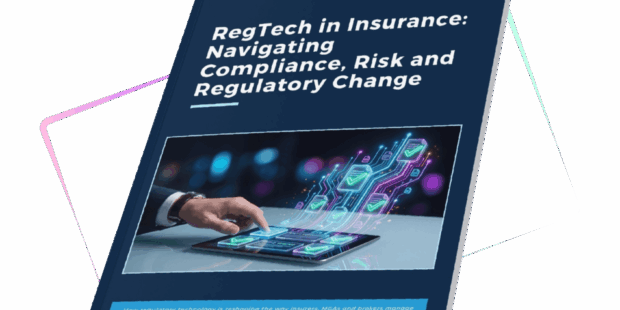



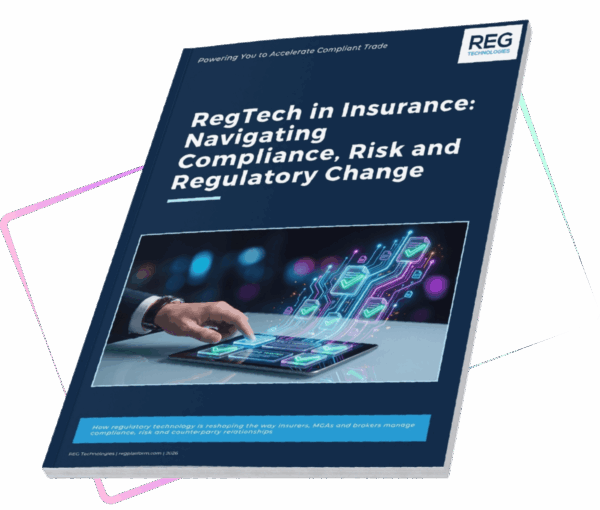
RegTech in Insurance: How Compliance Teams Keep Up with Regulatory Change
How regtech helps insurers, MGAs and brokers automate due diligence, monitor counterparties continuously and stay audit-ready as regulatory demands grow.
Counterparty data and compliance decisions at global scale.

REG monitors over 38,000 counterparties across 180 countries, running more than 3 million data checks each week, tracking over 10,000 data changes and raising around 35,000 operational alerts every month.


Regulators want proof that every broker, MGA, and third-party distributor in your panel is properly authorised, monitored, and documented. Getting that proof is a manual, fragmented process.
Every new broker appointment means more due diligence, more paperwork, and more compliance complexity. Your distribution network is scaling. Your team isn’t.
Information requests, TOBA renewals, and due diligence queries from your insurer and coverholder panel are constant and responding to them pulls your team away from actual business development.

We’ve built specific solutions for the compliance and operational challenges that come up most often in regulated insurance. Find yours.
The REG Platform brings together everything regulated insurance businesses need to manage counterparty relationships compliantly. Here’s how it’s structured.
 Core Platform
REG NetworkThe heart of the REG Platform. REG Network gives insurance businesses a single place to find, onboard, and monitor every counterparty they trade with, backed by real-time data from the FCA, Companies House, credit agencies, and sanctions lists.
Explore REG Network →
|
 Trading Layer
REG ExchangesThe trading layer where counterparties connect, share documents, and execute agreements. REG Exchanges is built into REG Network, but also accessible as a standalone for businesses trading within the network, including digital TOBA management at scale.
Explore REG Exchanges →
|
 Advanced Visibility
REG Risk 365For businesses that need deeper financial risk intelligence. REG Risk 365 adds continuous risk scoring, portfolio-level exposure analysis, and enhanced monitoring on top of REG Network, built for teams managing large or high-risk distribution chains.
Learn about REG Risk 365 →
|
Four stages. One continuous process. Everything your compliance and operations teams need to manage counterparty relationships properly.
Search FCA-authorised firms, appointed representatives, and international counterparties instantly. REG’s data covers 180 countries, updated in real time.
Automated due diligence, digital TOBA issuance, and a full audit trail from day one. Onboarding that used to take days takes hours.
Continuous monitoring across FCA status, financial position, and sanctions exposure. Real-time alerts when something changes — before it becomes a problem.
REG automates the manual work so your team can focus on growth. Customers consistently report material reductions in administrative workload.
We’ve built specific solutions for the compliance and operational challenges that come up most often in regulated insurance. Find yours.

CNA Hardy
The REG Network is a benefit the Insurance industry needs to get a hold of! REG solutions are now at the heart of our Broker onboarding and management process. Since partnering we have enjoyed a first class personal relationship and service with people that understand our business. We benefit from real time regulatory oversight and automated alerts and have achieved material efficiencies in our working practises.

Kindertons
It’s sped up the process, especially when it comes to onboarding people, because we’ve obviously got our due diligence to go through and everything’s there and so much quicker.
Collingwood Insurance Company Ltd
We would recommend the software to any potential client who is looking to streamline their due diligence function in making it automated and more efficient.


Compliance insight and practical guidance for regulated insurance businesses.
How regtech helps insurers, MGAs and brokers automate due diligence, monitor counterparties continuously and stay audit-ready as regulatory demands grow.
How regtech helps insurers, MGAs and brokers automate due diligence, monitor counterparties continuously and stay audit-ready as regulatory demands grow.
The FCA's second Enforcement Watch newsletter confirms something insurance compliance teams have felt building for months: assertive supervision under the Consumer Duty has moved from warning shot to established practice. Eleven investigations are now open, nearly double the six reported a year earlier, and five of them sit squarely inside insurance. Alongside the newsletter, a separate consultation is proposing the first formal definition of a "distribution chain" under the Duty. Together, they point to the same conclusion: firms that cannot see what is happening further down their counterparty network are the ones most exposed. This piece looks at what the FCA actually found, what the proposed distribution chain definition changes, and what it means for firms still managing that chain through email and spreadsheets.
Last month, the FCA urged firms to let go of tick-box compliance, the regulator suggested scrapping the certification regime, AI has made strides when it comes to underwriting and REG sponsored the latest edition of InsurTech Runclub. Read these articles and many more as we bring you all the important news and views in the insurance and financial services world…
The firms that struggle with PEP screening are rarely the ones with the smallest database. They are the ones whose screening sits apart from everything else they know about a counterparty. Once ownership, licensing, risk assessment and screening live in one place, a match stops being an alert to chase and becomes a decision you can make and evidence immediately.
Adverse media screening is the systematic identification of negative news and public record information about the people and organisations you do business with, used to inform onboarding decisions and ongoing due diligence. On 23 June 2026, the FCA published a multi-firm review of financial crime controls across large UK retail, wholesale and life insurers, and one finding lands hardest for compliance leads: it was not that the checks were missing, it was that the rationale behind them was never written down. This piece sets out what adverse media screening actually covers, why periodic, manual approaches are the specific failure mode the FCA is now testing for, and how to build screening that is risk-based, continuous and evidenced rather than an annual box tick. By the end, you will have a clear view of what "good" now looks like for an insurer's distribution chain, not just its own front book.
In July 2025 the FCA published its finalised guidance, FG25/3 on the treatment of politically exposed persons. It builds on the January 2024 amendment to Regulation 35 of the Money Laundering Regulations 2017, under which UK PEPs are presumed lower risk than foreign PEPs by default. The guidance also says non-executive board members of UK government departments should not automatically be treated as PEPs, and it expects a documented review when a PEP leaves office.
KYC compliance software verifies who your customers and counterparties are, assesses their risk, and keeps that evidence current. In insurance, it also has to cover businesses, ownership structures and delegated authority relationships, not just individuals. This guide sets out what the software must do, why tools built for banks miss the distribution chain, what changed in 2026, and how to evaluate vendors without relying on their sales decks. If you run an MGA, a brokerage or a principal firm, it gives you a practical framework for choosing a system that stands up to FCA scrutiny.
The FCA has moved from checking that firms have a Consumer Duty framework to testing whether that framework can be proved to work. Most firms are still trying to evidence outcomes with spreadsheets and email chains, which cannot show what is happening to customers across a distribution chain. This post sets out the tooling capabilities your compliance function needs to monitor outcomes, assess fair value and evidence oversight of MGAs, brokers and coverholders. It also explains why the distribution chain, rather than your internal process, is where most evidencing efforts break down.
Regulatory change management has stopped being a tracking exercise and become an evidencing one. The FCA's 2026 priorities extend supervisory attention into delegated authority arrangements, at the same time as the regulator works to simplify large parts of the rulebook, and simplification does not reduce your workload, it relocates it. Most UK insurance firms are still running this process on spreadsheets, with no consistent record of who assessed a change, who signed it off, or whether it reached the partners trading under their authority. This piece sets out what a regulatory change management framework capable of surviving a supervisory review actually looks like, and where the generic tooling market falls short of the insurance distribution chain.
Last month, the FCA defended the importance of Consumer Duty before the House of Lords, new non-financial misconduct rules came into effect, a memorial was held to mark the 9/11 attacks, reflecting on their lasting impact on the insurance industry and REG Technologies attended the European MGA Summit in Paris as a Gold Sponsor...