How REG Network Helps
Fix Third-Party Risk Blind Spots

You can see your direct counterparties clearly. What happens two or three links further down your distribution chain is usually invisible. REG Network extends oversight across the full chain of third parties your business depends on, not just the ones you contract with directly.
How REG Network Helps Fix Third-Party Risk Blind Spots

Why Third-Party Risk Blind Spots Create Risk

Most firms are not ignoring third-party risk deliberately. They simply have no practical way to see past the counterparty directly in front of them.


Many firms still rely on:

  • Oversight that stops at the first-tier counterparty relationship
  • Assurances from a counterparty about how they manage their own third parties
  • No visibility of subcontracted or delegated authority arrangements further down the chain
  • Distribution chain mapping done manually, if it happens at all, ahead of an audit
  • No standard process for assessing risk introduced by a counterparty’s own third parties
  • Chain risk treated as someone else’s responsibility once it moves a tier away

This tends to hold up while chains stay short and relationships stay simple. It stops holding up the moment delegated authority, coverholders or sub-agents are introduced.

How REG Network Helps Fix Third-Party Risk Blind Spots


The result is usually a combination of:

  • Accountability for a third party’s third party without any real visibility of who they are
  • Consumer Duty and Fair Value obligations that are difficult to evidence beyond the first tier
  • Risk events surfacing from parts of the chain no one was actively monitoring
  • Inconsistent oversight depending on how forthcoming a counterparty chooses to be
  • Audit findings that expose chain gaps the firm did not know existed

For compliance and risk teams, the issue is not a lack of concern about third-party risk. It is the absence of a system that shows the chain as it actually is, rather than as it was last assumed to be.


When third-party oversight depends on assumptions, manual mapping and information provided by individual counterparties, maintaining governance and understanding the true risk exposure across the chain becomes significantly more difficult.

Why Third-Party Risk Blind Spots Break Down Across Insurance, MGA and Broker Networks

Chain visibility does not disappear all at once. A model built around direct, first-tier relationships loses ground gradually as delegation, subcontracting and distribution complexity increase.

The result is often limited oversight, incomplete risk visibility and growing difficulty evidencing control across the wider distribution chain.

Distribution Chains Growing Faster Than Oversight

Every additional layer of delegation adds a relationship that sits outside a firm’s direct line of sight, and oversight processes built for simple, direct relationships rarely scale with the chain.

Delegated Authority Adding Layers of Distance

Coverholders and MGAs frequently appoint their own sub-agents and service providers, each one a step further removed from the firm ultimately accountable for the chain.

Assurance-Based Oversight Instead of Verified Data

Without independent visibility, oversight of downstream third parties depends on what a counterparty chooses to disclose, not on verified information.

No Shared View Across the Chain

When chain information sits in individual relationship owners’ inboxes rather than a shared record, no one holds a complete picture of who is actually connected to who.

Manual Chain Mapping That Only Happens Once a Year

Distribution chains are often mapped for an audit or a regulatory return, then left untouched until the next one is due, even as the chain itself keeps changing underneath.

Oversight That Doesn’t Scale Beyond Direct Relationships

What is manageable for a handful of direct counterparties becomes unworkable once each of them brings their own network of third parties into the picture.


How REG Network Delivers Third-Party Risk Visibility

REG Network extends counterparty oversight beyond the relationships a firm manages directly, surfacing the wider chain of connected third parties and giving compliance and risk teams a single, current view of exposure across every tier.

Instead of relying on a counterparty’s word for how their own third parties are managed, organisations can see chain relationships directly, monitor them continuously, and apply configurable risk criteria wherever the chain demands closer attention.

Distribution Chain Mapping

Distribution Chain Mapping

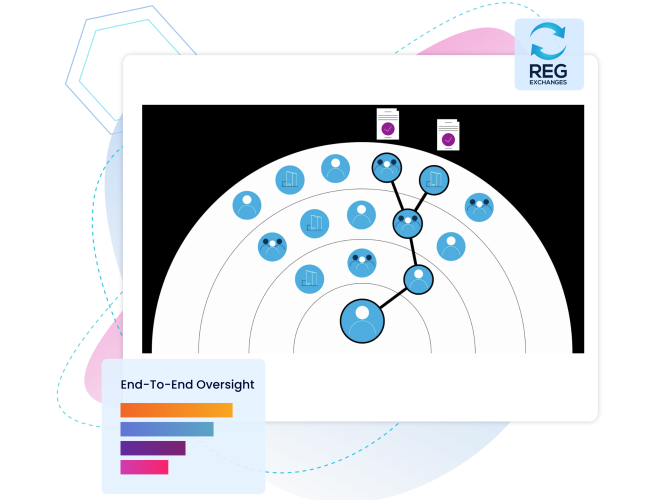
REG Network surfaces the connections between counterparties already active within the network, extending visibility beyond the relationship a firm manages directly.

Organisations can:

  • See which of their counterparties are themselves connected to other REG Network members
  • Identify delegated authority and subcontracted relationships within the chain
  • Build a clearer picture of exposure across multiple tiers, not just the first one
  • Flag chain relationships that fall outside expected risk parameters

This replaces manual, point-in-time chain mapping exercises with a live, ongoing view of how a distribution chain is actually structured.

Continuous Monitoring Extended Across the Chain

Continuous Monitoring Extended Across the Chain

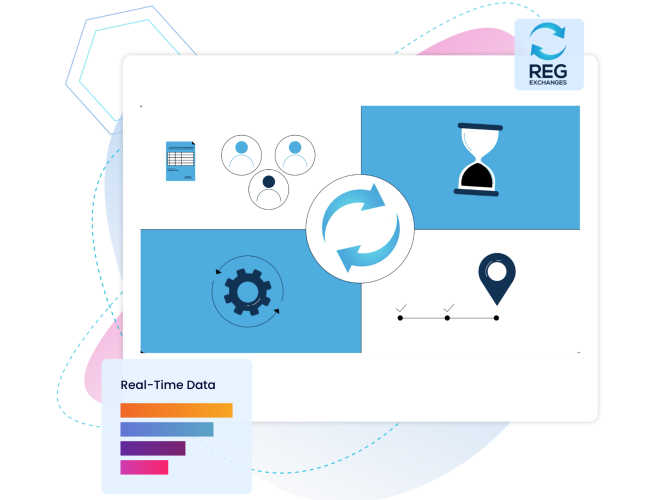
Chain visibility only has value if it stays current. REG Network applies the same continuous monitoring used for direct counterparties to the wider chain, covering sanctions, FCA status, financial deterioration and Companies House changes wherever a connected third party is active within the network.

This means a change in the chain, not just a change in a direct relationship, can be surfaced as it happens rather than discovered later.

Configurable Risk Appetite for Complex Chains

Configurable Risk Appetite for Complex Chains

For organisations managing longer or higher-risk chains, REG Risk 365 adds configurable risk appetite rules and RAG scoring that can be applied consistently across every tier of a distribution chain, not only to first-tier counterparties.

Key Platform Capabilities

Distribution Chain Visibility

See the counterparties your counterparties are connected to, not just the relationships you hold directly.

Downstream Counterparty Monitoring

Extend continuous monitoring beyond first-tier relationships to third parties further down the chain.

Delegated Authority Oversight

Identify coverholder, MGA and sub-agent relationships that would otherwise sit outside direct visibility.

Configurable Risk Scoring Across Tiers

Apply consistent risk appetite criteria across every level of a distribution chain, using REG Risk 365.

Consumer Duty and Fair Value Evidence

Build a clearer, evidenced picture of chain oversight to support Consumer Duty and Fair Value obligations.


Learn more about Real-Time Regulatory Monitoring and Centralised Compliance Data.

Operational and Compliance Benefits

Chain-level visibility does not just close a blind spot. It changes third-party risk from something assumed to something evidenced.

Full Chain Visibility, Not Just First Tier

Full Chain Visibility, Not Just First Tier

See the wider network of third parties connected to your counterparties, rather than relying on their word for how those relationships are managed.

Reduced Blind Spot Exposure

Reduced Blind Spot Exposure

Fewer relationships sit entirely outside oversight, reducing the risk of exposure surfacing from parts of the chain no one was monitoring.

REG Network already connects more than 24,000 counterparties across 191 countries, so a meaningful part of a firm’s distribution chain is often already mapped within the network before any manual work begins.

Consistent Oversight Across Every Tier

Consistent Oversight Across Every Tier

The same monitoring and risk standards apply however far a third party sits from the direct relationship, rather than oversight thinning out the further down the chain it goes.

Stronger Evidence for Consumer Duty and Fair Value

Stronger Evidence for Consumer Duty and Fair Value

A documented, current view of chain relationships is easier to evidence to a regulator than assurances gathered informally from a counterparty.

Faster Response When Chain Risk Emerges

Faster Response When Chain Risk Emerges

Earlier visibility of a downstream change means more time to assess and respond, rather than discovering an issue once it has already reached the firm directly.

Real-World Examples from Insurance Organisations


REG Network helps insurers, MGAs and brokers extend oversight beyond their direct counterparties, into the wider chain of third parties those relationships depend on.


Collingwood Insurance Logo

Collingwood Insurance
Insurance Carrier
Collingwood used REG Network to automate broker monitoring and streamline oversight of its counterparty network.

 
View case study →

ARC Legal Logo

Arc Legal Group
MGA
Arc Legal Group uses REG Network to centralise due diligence and compliance processes and strengthen audit readiness across its counterparty relationships.

 
View case study →

Property Protector Logo

Property Protector
Broker
Property Protector improved confidence in onboarding and counterparty decision making using REG Network.

 
View case study →

Frequently Asked Questions

What counts as a “third party” beyond my direct counterparties?

Any organisation connected to a counterparty you deal with directly, including sub-agents, coverholders’ own appointed partners and other delegated relationships further down the distribution chain.

How does REG Network map distribution chains?

REG Network surfaces connections between counterparties that are already active within the network, showing where a firm’s direct counterparties are themselves connected to other members.

Does this replace due diligence on my direct counterparties?

No. Chain visibility extends oversight beyond the first tier. Due diligence and monitoring of direct counterparties continues to work exactly as it does today.

Do I need REG Risk 365 for chain-level risk scoring?

Chain visibility is available within REG Network. REG Risk 365 adds configurable RAG scoring and risk appetite rules that can be applied consistently across every tier of a chain, which most firms add once chains become longer or more complex.

Can I see third parties who are not yet REG Network members?

Visibility depends on the connected party being active within the network. Coverage grows as more organisations join, and REG Network already spans 24,000+ counterparties across 191 countries.

Does this remove my Consumer Duty or Fair Value obligations for the wider chain?

No. REG Network gives you the visibility and evidence needed to demonstrate oversight of the chain. Responsibility for compliance decisions and regulatory obligations remains with your organisation.


See the Chain, Not Just the Counterparty

REG Network extends oversight beyond your direct counterparties, into the wider network of third parties your distribution chain actually depends on. Whether the gap is a delegated authority relationship, a sub-agent, or a third party you did not know you were exposed to, REG Network makes it visible.