









Blogs

Compliance Culture in Insurance: How Leaders Build and Maintain It

What Is Compliance Culture?

Compliance culture is the shared set of values and habits that makes following the rules a normal part of everyday work rather than a separate task. In an insurance firm, a strong compliance culture means everyone from the board to front-line teams understands obligations such as Consumer Duty and Fair Value, feels able to raise concerns, and treats good customer outcomes as the goal. It applies just as much to brokers and MGAs as to insurers, because each firm in the distribution chain relies on the others to do the right thing.

Like any other business function, a strong compliance culture is built on years of planning, strategizing and training, and most of the time it is set from the top and communicated all the way to the bottom. 

So why is building a robust compliance culture crucial? How can insurance leaders foster a strong culture of compliance throughout their organisations? And what role does technology play in bridging the compliance culture gap? 

The importance of building a strong and pervasive compliance culture in the insurance industry

Why a Strong Compliance Culture Matters in Insurance

Building and maintaining a robust compliance culture is a non-negotiable necessity to mitigate regulatory risks and ensure absolute adherence to regulatory laws and standards, such as the FCA’s Consumer Duty and Fair Value laws.  

A strong culture of compliance creates an environment in which ethical behaviour is prioritised above all else, thereby empowering employees at every level to uphold the highest compliance standards by ingraining them in their daily work routines. 

Moreover, an organisation that benefits from a strong and proactive compliance culture is always one step ahead of avoiding hefty non-adherence fines and reputational harm – including building trust with customers, regulators, trade partners and investors. 

Not to mention that winning firms are the ones that consider compliance culture as integral to their daily operations, rather than a mere formality.  

According to Victoria Slade, Head of Sales at REG Technologies: “We know that a lot of these regulations and legislations have come in as a result of bad practice to protect the consumer, that’s why it’s there. So I think if there’s a greater understanding of that, rather than just seeing it as a necessity and a tick-box exercise, and always embracing that and collaborating with the rest of the market to see how they’re doing it and a willingness to actually do that.. That will be the biggest impact.” 

non-compliance is more expensive and damaging than being compliant

The Heavy Costs of Non-Compliance

Many firms believe that compliance is expensive, forgetting that non-compliance is even more costly and damaging to firms’ reputations. The only way for companies to keep their costs down is to abide by the laws and incorporate a compliance culture that’s acknowledged and acted upon by all departments.  

At the end of the day compliance is a mindset, and businesses that thrive are the ones that go the extra mile to ensure that everyone is on the same page. 

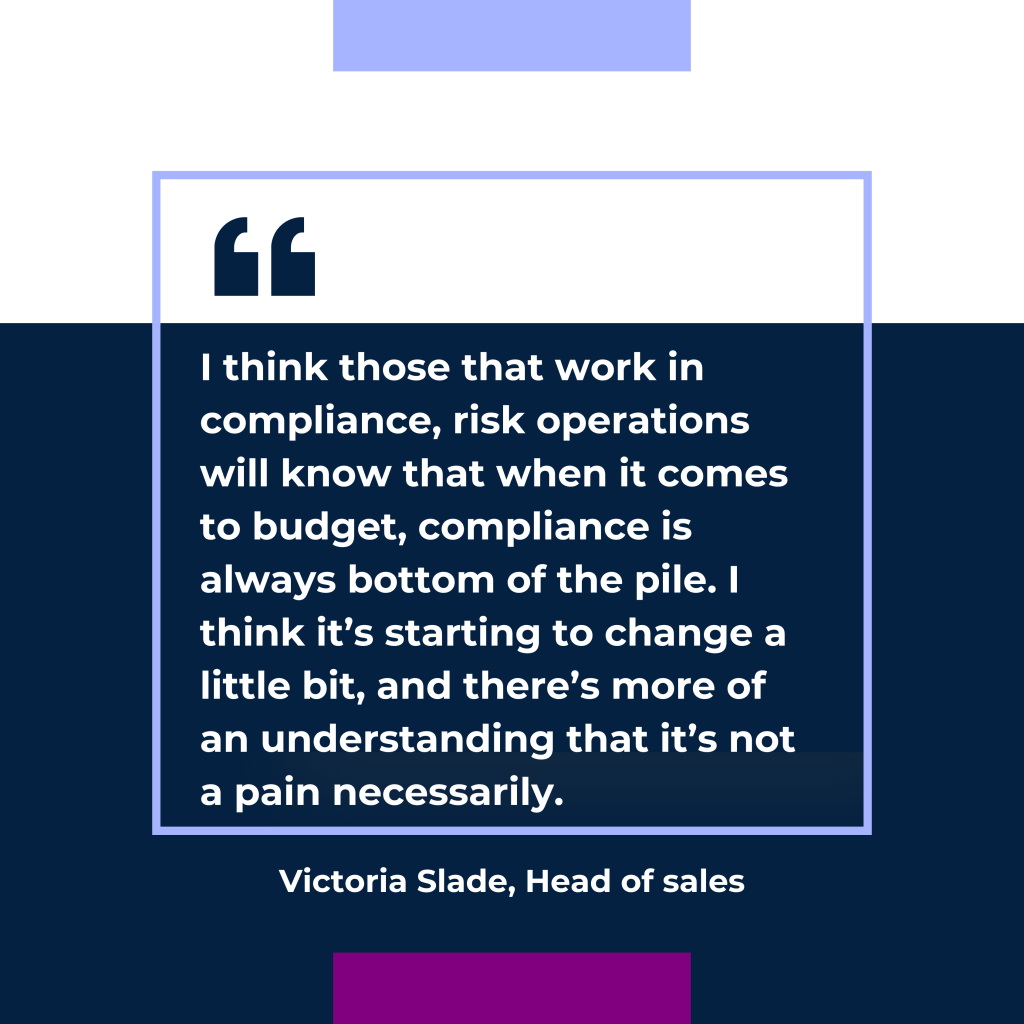
As Victoria Slades puts it: “I think those that work in compliance, risk operations will know that when it comes to budget, compliance is always bottom of the pile. I think it’s starting to change a little bit, and there’s more of an understanding that it’s not a pain necessarily.” 

With more compliance and insurance leaders realising that non-compliance results in severe repercussions and expenses, attitudes are starting to shift, and consumers’ benefits are becoming a determining factor when adopting a more resilient regulatory culture. 

Quote about culture of compliance
The regulatory burden impacts building a strong compliance culture

How the Regulatory Burden Challenges a Culture of Compliance

The regulatory burden in insurance is a major obstacle to creating a solid compliance culture. Complex and changing regulations require significant resources, both financial and human, so it can sometimes seem like an impossible job to be proactive rather than reactive. And this burden often means focus shifts from embedding compliance as a core value to just meeting deadlines and avoiding penalties.  

Additionally, the fear of non-compliance can lead to a rigid and procedural approach, stifling the integration of compliance into everyday decision-making. As a result, insurers may struggle to establish a compliance culture that is both adaptive and deeply ingrained, undermining efforts to align with regulators’ expectations effectively and sustainably. 

According to the Thomson Reuters 2023 Cost of Compliance survey, global financial firms come across 257 changes in regulations daily from more than 1200 regulators, which ultimately impact a firm’s culture and compliance. 

However, this process doesn’t have to be as complicated as it sounds, and minor adjustments, including the adoption of technology, can go a long way. In fact, adopting RegTech can do the heavy lifting, making compliance and counterparty due diligence seem like a breeze.  

senior executives and managers have a big influence in fostering a culture of compliance

A Compliance Culture is Defined from the Top

Quote around how to build a good compliance culture

One of the most crucial determinants of a company’s compliance culture is its leaders and the way they communicate their values and plans of action with the rest of the organisation. Authority figures have the most power and tend to have more decisive influence when their voice is conveyed clearly – So they must lead by example. 

C-suites and managers in the insurance sector are responsible for embedding a culture of compliance by staying on top of their compliance duties, taking training courses, and knowing the regulatory market inside out to become a respected influential figure.  

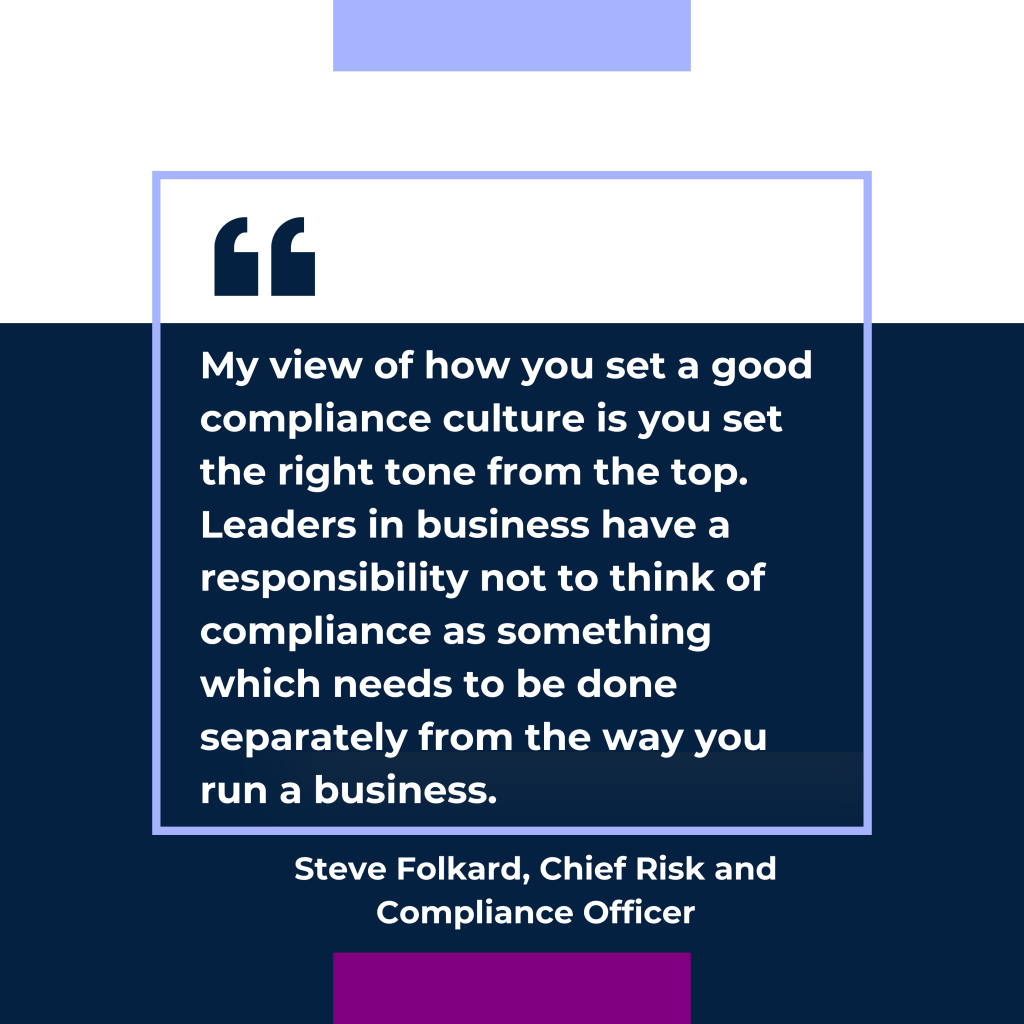
In our recent webinar in collaboration with Insurance Post, Chief Risk and Compliance Officer at Jensten Group, Steve Folkard shares his view around this topic: “My view of how you set a good compliance culture is you set the right tone from the top. Leaders in business have a responsibility not to think of compliance as something which needs to be done separately from the way you run a business”.  

He goes on to say that: “If you’re focused on consumers, you’re designing good products, you care about the outcomes from your customer and you care about the service you provide; compliance should naturally fall into place behind that.” 

Compliance conversations must be central to all important strategic meetings business leaders hold and transmit their message to senior managers, who in turn are accountable for ensuring the rest of the employees are fully onboard and act proactively in regard to compliance. 

5 Tips for Fostering and Maintaining a Pervasive Compliance Culture

Focus on Consumer Benefit

Developing products with consumers’ benefits and positive outcomes in mind defines the path for a successful compliance culture. At the end of the day, as much as compliance is about due diligence and oversight of trading partners, it’s primarily about protecting consumers. Therefore, when defining the business’s regulatory standards, the end consumer must always remain top of mind. 

Encourage Collaboration and Open Dialogue

Without collaboration across departments, a firm’s compliance system is set for failure or incompleteness. Every department, including Sales, Marketing, HR and IT must be involved in compliance discussions in order for them to be up to date with all laws, but also to just foster and maintain a strong compliance culture across the entirety of the organisation. Moreover, enabling all departments and employees to provide feedback without judgment strengthens compliance culture even further. 

Continuous Training is Key

Building a strong compliance culture revolves in majority around continuous training of staff of different departments. Compliance is complex and always evolving, which means that employees need to constantly develop their knowledge as compliance is not a once and done task.  

Zoë Parsons, Head of Marketing at REG says that: “Compliance should be embedded in the entire organisation. That comes with education – Whether that’s educating people on regulation or educating teams on the use of technology. But then also if you combine the two ensuring that everyone has a centralised repository of information as well as the understanding, I think that’s what is going to set the good compliance foundation and transparency across the whole company.” 

Leverage Technology

Technology plays a pivotal role in fostering a pervasive compliance culture, particularly in insurance. From its capability at reducing manual processes and data siloes to centralising all compliance data into one single integrated platform, RegTech promotes transparency across all departments, enabling unified access so that every single department is aware of any updates. Moreover, RegTech also helps make compliance an integral part of an organisation. 

Build a Clear Compliance Framework

Compliance culture doesn’t get built by chance – It is built on carefully developed frameworks that fit the needs of each organisation. According to analyst Michael Rasmussen, having clear policies and procedures is pivotal. He believes that policies must embody the organisation’s core values and be readily accessible via a centralised portal. Fragmented storage of policies may result in inconsistencies, thereby hindering the ability to uphold a unified and coherent approach. 

Quote of how compliance should be embedded in the entire organisation

How to Measure Your Compliance Culture

A culture of compliance is hard to see, but you can track the behaviour that shows whether it is working. Insurance leaders can start with a small set of indicators:

Speaking up. How many concerns, breaches and near misses are reported, and how quickly they are escalated. A sudden fall in reports can be a warning sign rather than good news.
Training that sticks. Completion rates are a start; short follow-up checks show whether people can apply what they learned.
Oversight of third parties. Whether due diligence on brokers, MGAs, coverholders and other trading partners is complete and current, not only at onboarding.
Board attention. How often compliance and customer outcomes appear on board and senior management agendas, and whether actions are followed up.

Reviewing these measures regularly helps you embed a compliance culture that holds up under scrutiny from the FCA, capacity providers and auditors. For a wider set of measures, see our guide to regulatory compliance metrics.

Importance of compliance culture in insurance firms for long term regulatory success.

Final Remarks

Fostering and maintaining a strong compliance culture is essential for insurance firms aiming to thrive in today’s complex regulatory environment. The importance of a compliance culture cannot be overstated, as it not only helps mitigate risks but also enhances a firm’s reputation and builds trust with stakeholders.  

By embedding a culture of compliance into the core values of the organisation, companies can ensure that every employee understands their role in upholding ethical standards and regulatory requirements.  

Ultimately, a pervasive compliance culture leads to better decision-making, increased accountability and long-term business success. 

      To learn more, watch the full webinar in collaboration with Insurance Post: Easing the Regulatory Burden to Allow Insurers and MGAs to Prosper.

Frequently Asked Questions

What is compliance culture?

Compliance culture is the shared set of values, behaviours and habits that make following the rules a normal part of everyday work, not a separate task. In insurance it means staff at every level, from the board to front-line teams, understand obligations such as Consumer Duty and Fair Value, speak up about risks and treat good customer outcomes as the goal.

How do you create a strong compliance culture?

Start at the top: leaders must talk about compliance in strategy meetings and act on it themselves. Then give every team regular, practical training, bring Sales, Marketing, HR and IT into compliance discussions, keep policies in one accessible place and use technology to remove manual work, so the right behaviour becomes the easiest one for people to follow.

What cultural benefits come from embedding compliance into operations?

Embedding compliance into daily operations builds trust, with customers, regulators, capacity providers and trade partners. People make better decisions because they understand why the rules exist, problems are raised earlier and fixed faster, and accountability becomes shared rather than sitting with one team. For insurers, brokers and MGAs it also lowers the risk of fines, remediation costs and reputational damage.

How can an insurance firm improve its compliance culture?

Measure where you are first, using staff surveys, breach and near-miss logs, training completion and how quickly issues are escalated. Then close the gaps: make senior managers accountable for compliance outcomes, reward people who raise concerns, replace spreadsheets and email chains with a single source of compliance data, and review progress with the board regularly rather than once a year.

This article was published by:

Article author

Manal Tjiou, Marketing Executive at REG Technologies

Manal Tjiou

Marketing Executive

Manal Tjiou shares insights on regulatory compliance, MGAs, insurance marketing, and compliance developments across the insurance industry.

View LinkedIn profile

See how The REG Network can help you