









Frequently Asked Questions
A KYC checklist is a documented sequence of verification steps a firm follows before and during a business relationship. It covers customer identification, due diligence proportionate to risk, and ongoing monitoring. Having it written down means checks are applied consistently and the evidence exists when a regulator or capacity provider asks for it.
For corporate counterparties: registered company name, business registration number, company address and status, business type, bank name, licences and partnership agreements, articles of incorporation, financial statements, directors’ details and verification of Ultimate Beneficial Owners. For individuals: identity documents plus address and date of birth confirmation.
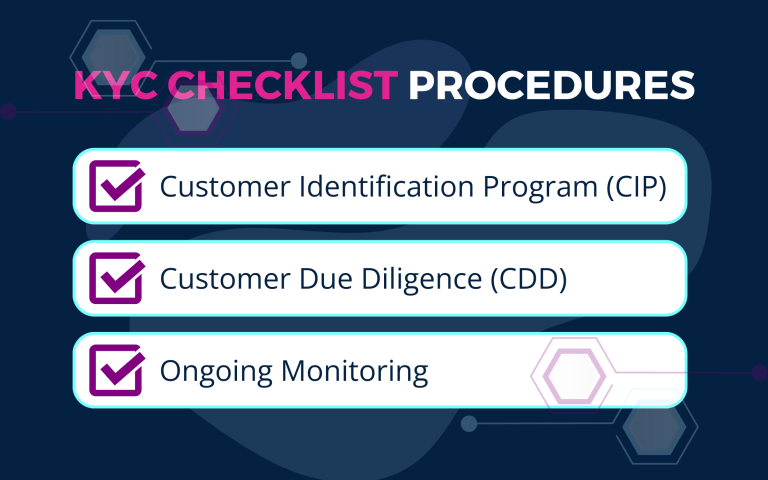
Identification and verification, Customer Due Diligence and ongoing monitoring. Due diligence itself splits three ways by risk: simplified for low-risk relationships, standard for most, and enhanced where geography, industry or PEP status warrants deeper scrutiny. Ongoing monitoring is the step firms most often under-resource.
KYC verifies individuals. KYB verifies organisations, including their ownership structure and Ultimate Beneficial Owners. Insurance firms usually need both, because a corporate trading partner requires business verification plus identity checks on the people who ultimately control it. Treating them as one process is where gaps appear, since a company can pass registration checks while its beneficial owners remain unverified.
KYC is not a one-off task at onboarding. Records should be refreshed when a counterparty’s circumstances or risk profile change, and monitored continuously in between. Firms relying on periodic manual reviews tend to discover changes late, which is where automated monitoring and alerting earns its cost.